

A Personal Story About Trust, Bureaucracy, and Common Sense in Education
Today I want to speak about one of my core Focus Principles: “Know our Kids.”
I want to caveat this post by saying this is NOT a condemnation of current practices by the district.
This principle means that our district must know each child deeply from the very first day. It requires bringing families in early as true partners and choosing practical, common-sense solutions over rigid, one-size-fits-all bureaucratic approaches driven by impersonal academic diagnoses.
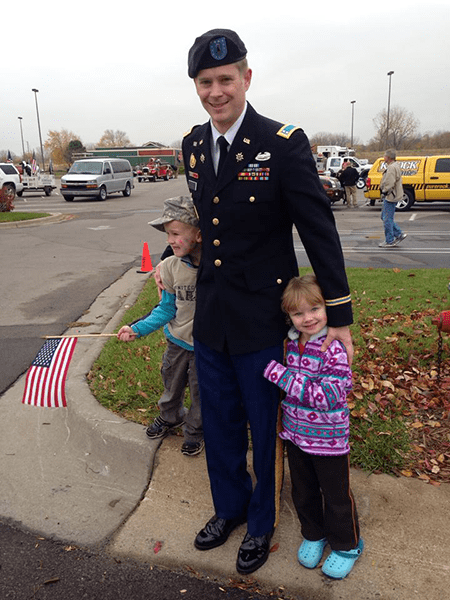
Let me share a story from our own family that illustrates why this principle is so important. In September of 2016, my family and I were stationed in Huntington, United Kingdom. We had just moved there from Kansas, and our son was beginning third grade. His teacher emailed my wife and me after noticing that he seemed to have some trouble pronouncing the letter “R.”
The truth was that he did not have a speech impediment; he was simply carrying over a German accent. He had grown up speaking German as a toddler and had attended German preschool. Our teacher did exactly what a caring educator was told to do. She contacted the district speech therapist, who observed him and confirmed the issue. We responded promptly, explaining that we were already aware of it, that we had been working with him at home, and that we would continue to do so. But for the Department of Defense Schools system, that was not sufficient. They insisted that he be entered into the Exceptional Family Member Program—EFMP.
EFMP was originally designed to support military families with serious disabilities requiring extensive ongoing care, particularly during moves between duty stations. On paper, it is a well-intentioned program. Yet, like many federal initiatives, it expanded into an onerous, bureaucratic system that could influence assignments, promotions, and daily family life.
I pushed back and clearly explained why this step did not make sense for our son. The system insisted anyway and would label my wife and I as “uncooperative”. Feeling over a barrel, we finally signed the paperwork and moved forward.
Over the next six months, our son was pulled from class for thirty minutes each week to meet with the speech therapist. The administration also required us to attend monthly progress meetings with the therapist and the school—meetings that were especially difficult given my demanding work schedule.
In the meantime, our son began falling behind in his regular schoolwork. And, from what he described, the sessions consisted mostly of back-and-forth conversation with little in the way of actual techniques or training. After six months of time and effort, there was zero measurable improvement. Only a great many hours were wasted.
Frustrated, at the end of third grade, I turned to YouTube. I found straightforward videos demonstrating the proper tongue position for the American “R” sound. I spent one focused thirty-minute session working with my son, and it clicked. He was ‘fixed’.
Incidentally, two years later when I retired from active duty, the military attempted to delay my retirement paperwork over additional EFMP meetings and plans—exactly as I had predicted. I ignored them.
The real takeaway from this experience is that we must remain wary of how good intentions can create unintended traps. Our son’s teacher knew him. She identified a potential issue and reached out because she genuinely cared about teaching and had a personal stake in his success. Then the administrative bureaucracy intervened. Good intentions hardened into procedure for the sake of procedure. Our son stopped being an individual boy and became a file … a number to be managed by regulation.
I am not suggesting that Rockford Public Schools operate in this manner today. But I promise you this: I will never allow good intentions in our district to harden into blind bureaucracy that loses sight of the actual child and the actual family in front of us.
That is what “Knowing our Kids” is all about.
If this story resonates with you—if you want Rockford schools that truly know our children, that place families first, and that choose common sense over red tape—then I am asking for your support today.
Together we can ensure that every Rockford child is known, every family is heard, and every good intention actually reaches the child it is meant to help.

Leave a Reply